
Are ghosts actually real ?

 The existence of ghosts is a topic of much debate and speculation, and opinions vary widely. 
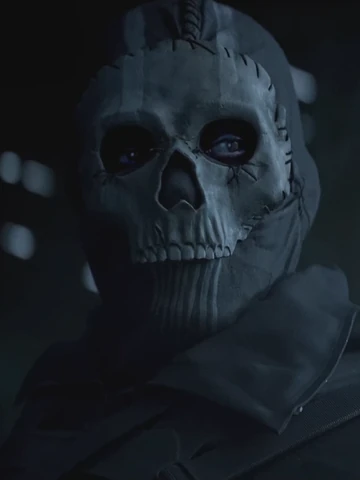

From a scientific standpoint, there is currently no empirical evidence to support the existence of ghosts. Many reported ghostly encounters can often be attributed to psychological factors, such as perception errors, hallucinations, or the influence of cultural and social beliefs.


However, belief in ghosts is deeply rooted in various cultural and religious traditions, and many people report personal experiences that they interpret as encounters with spirits or apparitions. 


These experiences are often subjective and can be influenced by factors such as belief systems, cultural background, and environmental conditions.


While science has not provided conclusive evidence for the existence of ghosts, the topic continues to be a part of folklore, mythology, and popular culture. 


It's essential to approach the subject with an open mind while also considering the lack of scientific evidence supporting the existence of ghosts.

Comments

Popular posts from this blog

when will spacex send people to mars ?

There was no specific timetable for SpaceX's ambitious intentions to carry humans to Mars as of my most recent information update in January 2022.  Elon Musk is the company's leader. Musk has proposed a crewed journey to Mars that might launch in the middle of the 2020s, but there are a number of technological, legal, and financial obstacles that could prevent this from happening.  The precise timescale for SpaceX's development of the Starship spaceship, a crucial element for Mars missions, is yet unknown. For the most recent details on SpaceX's intentions for Mars, check out the company's official website or the most recent news sources.

What would happen if a ceiling fan fall on you while it is turned on ?

 A ceiling fan falling while it is turned on can pose serious risks and potential hazards.  The outcome would depend on various factors, including the height from which the fan falls, the speed at which it is rotating, and the angle of impact. Here are some considerations: 1. **Blade Injuries:**    - Ceiling fans typically have multiple blades that can cause injuries if they come into contact with a person. The speed of the rotating blades can increase the severity of injuries. 2. **Impact Force:**    - The impact force from a falling ceiling fan, especially if it is turned on, can cause significant harm. The weight and speed of the falling fan can lead to injuries such as cuts, bruises, and fractures. 3. **Head Injuries:**    - If the falling fan strikes a person on the head or neck, there is a risk of head injuries, which can range from minor concussions to more severe traumatic injuries. 4. **Risk of Electrical Shock:**    - Since the...

Top 10 Science experiments you can do at home !

 Certainly! Here's a list of simple and safe science experiments that you can do at home.  Always remember to follow safety guidelines and, if necessary, seek adult supervision: 1. Baking Soda and Vinegar Volcano    Create a classic volcanic eruption by combining baking soda and vinegar. You can construct a volcano using clay or playdough and watch it "erupt" when the two substances react. 2. Homemade Lava Lamp    Combine water, oil, food coloring, and effervescent tablets (like Alka-Seltzer) in a bottle to create a mesmerizing homemade lava lamp. Observe the colorful bubbles moving through the oil. 3. Rainbow in a Jar Layer different liquids with different densities (like honey, dish soap, water, vegetable oil) in a clear jar to create a colorful rainbow effect. This experiment illustrates the principle of density. 4. DIY Slime Mix glue and liquid starch or borax solution to create your own slime. Experiment with different ratios to achieve different textu...